
As I stirred the vibrant colors of freshly sliced vegetables and fragrant sesame oil in my pan, the aroma of traditional Korean Japchae wrapped around me like a warm hug. This delightful dish features chewy sweet potato glass noodles, which transform any ordinary meal into a special occasion. What I love most about Japchae is its versatility; you can whip it up for a quick family dinner or serve it at a gathering to impress friends and family alike. Plus, it’s not only nutritious but also gluten-free, making it a hit for everyone. Intrigued by how simple ingredients can create such a comforting dish? Let’s dive into this culinary adventure together!
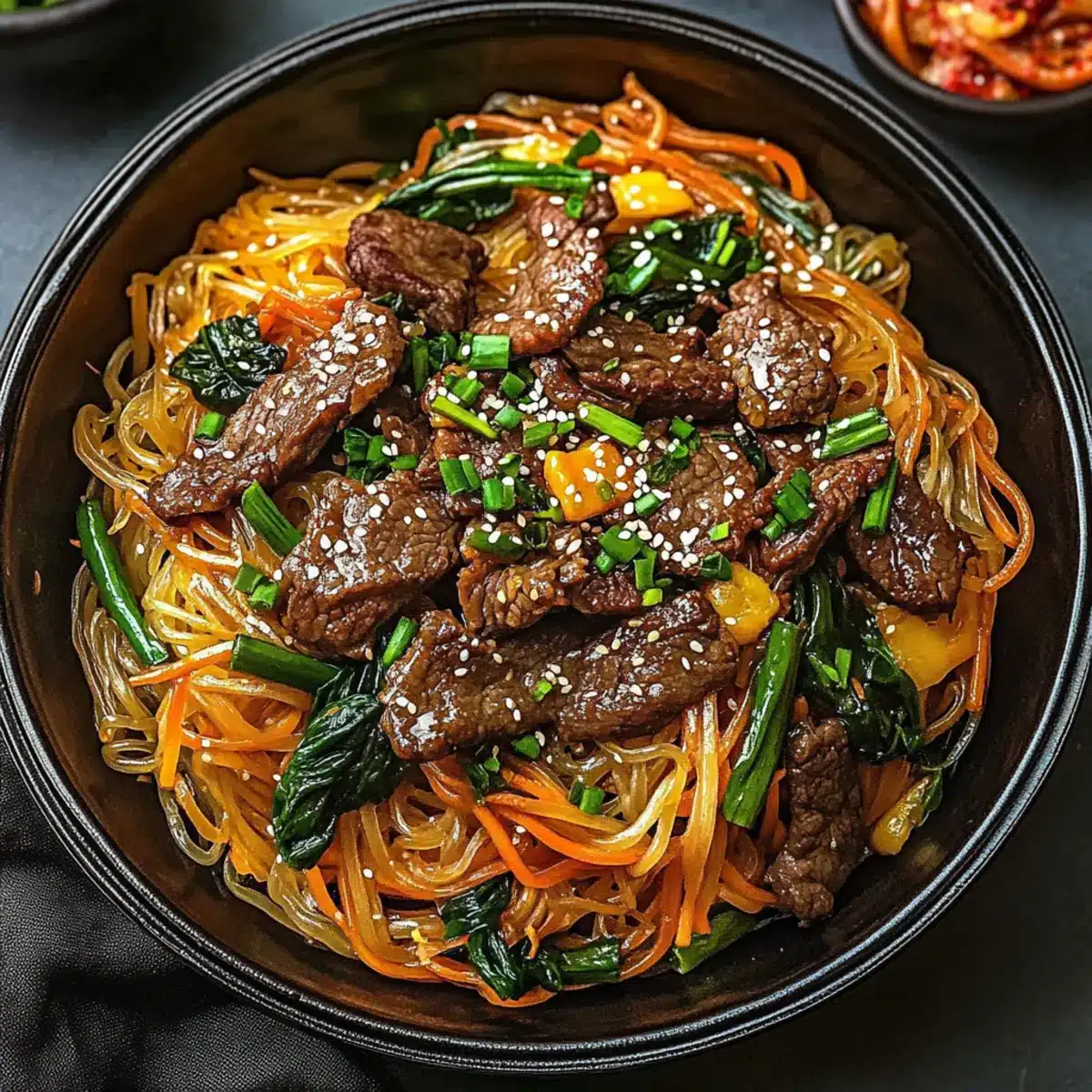
Why is Japchae so beloved?
Versatile and adaptable, Japchae shines in any setting, whether it’s a casual weeknight or a festive gathering. Nutritious ingredients like sweet potato noodles and colorful veggies pack this dish with flavor and health benefits. Simple preparation means spending less time in the kitchen and more time enjoying your meal, perfect for busy cooks. Crowd-pleaser status is guaranteed, as it appeals to various dietary preferences with variations like chicken or tofu. Plus, it’s gluten-free, so everyone can enjoy a taste of Korea right at home!
Japchae Ingredients
• Dive into this flavorful dish with ease!
For the Noodles
• Sweet Potato Noodles – Provides a unique chewy texture and glass-like appearance when cooked; perfect for an authentic Japchae experience.
For the Protein
• Beef (or Chicken/Tofu) – Adds protein and richness; flank steak or sirloin yields the best flavor, but tofu is a wonderful vegetarian alternative.
For the Vegetables
• Carrots – Contributes vibrant color and a slight sweetness; slice thinly for even cooking.
• Bell Peppers – Adds crunch and flavor; feel free to mix colors for visual appeal!
• Spinach – Introduces a lovely green element and nutrition; try using fresh or frozen.
• Onions – Brings sweetness and depth; yellow onions work best for balanced flavor.
For the Seasoning
• Soy Sauce – Essential for seasoning, adding depth and umami; opt for low-sodium soy sauce for a healthier option.
• Sesame Oil – Gives a nutty flavor and rich aroma, enhancing the dish; substitutes like olive oil can change the profile.
For the Garnish
• Green Onions – Adds a refreshing note and color contrast; chop finely and sprinkle generously before serving.
Step‑by‑Step Instructions for Japchae
Step 1: Prepare the Noodles
Start by soaking the sweet potato noodles in a bowl of hot water for about 20-30 minutes, or until they soften and become pliable. Drain the noodles well and set them aside, allowing any excess moisture to drip off. This step is crucial for achieving the authentic chewy texture that makes Japchae special.
Step 2: Slice the Protein and Vegetables
While the noodles are soaking, thinly slice your choice of protein, whether it’s beef, chicken, or tofu, into bite-sized pieces. Next, prepare an array of colorful vegetables like carrots, bell peppers, and onions by slicing them into thin strips. This not only enhances the visual appeal of your Japchae but also ensures even cooking.
Step 3: Stir-Fry the Beef
Heat a tablespoon of oil in a large skillet or wok over medium-high heat. Once the oil is shimmering, add the sliced beef; cook for about 3-5 minutes until it’s browned and just cooked through. Remove the beef from the pan and set aside, leaving the flavorful juices in the pan for the vegetables.
Step 4: Stir-Fry the Vegetables
In the same pan, toss in your prepared vegetables and stir-fry for about 4-5 minutes, or until they are tender yet still slightly crisp. The vibrant colors will show that they are cooked perfectly. Be sure to keep the heat high to maintain that lovely, fresh texture that complements the dish nicely.
Step 5: Combine and Season
Return the cooked beef to the pan with the sautéed vegetables. Add the soaked sweet potato noodles, along with soy sauce and a drizzle of sesame oil. Stir-fry everything together for about 3-4 minutes, ensuring all the ingredients are well combined and heated through. You’ll see the noodles become glossy and flavorful during this step.
Step 6: Final Touch and Serve
Once everything is well-mixed and heated, remove the pan from the heat. Garnish your delicious Japchae with sliced green onions for a fresh finish. Serve hot and watch as everyone enjoys this comforting dish, perfect for any occasion!
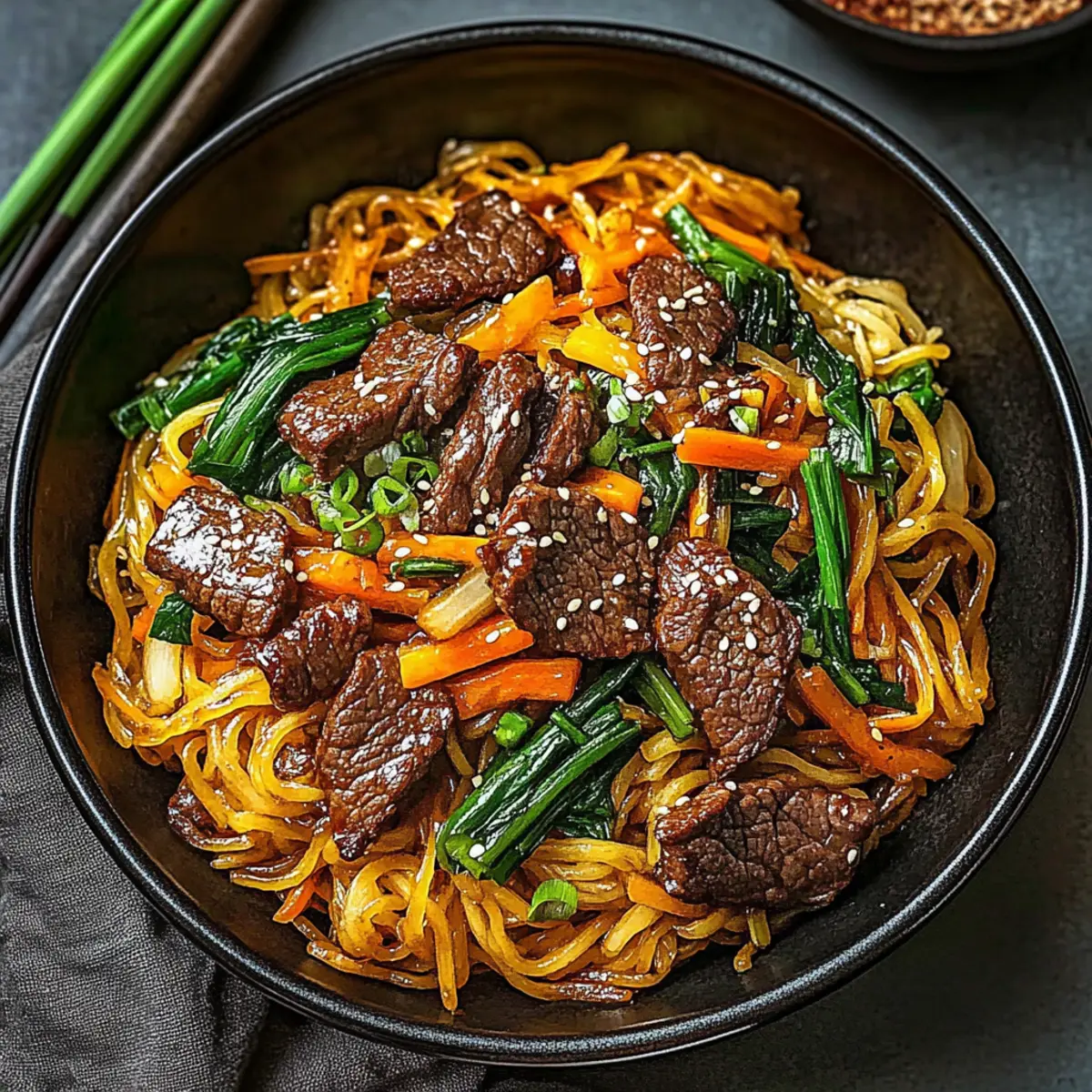
How to Store and Freeze Japchae
Fridge: Store leftover Japchae in an airtight container for up to 3 days. Allow it to cool to room temperature before sealing to maintain freshness.
Freezer: For longer storage, freeze Japchae in a freezer-safe container for up to 2 months. Portion out servings for easy reheating later.
Reheating: When ready to enjoy, thaw frozen Japchae overnight in the fridge. Reheat in a pan over medium heat, adding a splash of water or broth to regain moisture.
Room Temperature: Keep prepared Japchae at room temperature for no more than 2 hours to ensure food safety and quality.
Make Ahead Options
Preparing Japchae ahead of time is a fantastic way to save time on busy weeknights! You can soak the sweet potato noodles and slice your vegetables up to 24 hours in advance; just be sure to store them separately in airtight containers. For even more convenience, cook the beef (or tofu) and refrigerate it for up to 3 days. When you’re ready to serve, simply stir-fry the vegetables first, add the noodles, and reintroduce the pre-cooked protein with your soy sauce and sesame oil. This way, you’ll have a delicious Japchae ready in no time, maintaining its delightful flavors and textures with minimal effort!
What to Serve with Deliciously Versatile Japchae?
Elevate your Japchae experience with these delightful pairings that will create a memorable meal for any occasion.
-
Grilled Korean Beef: Juicy and smoky, this dish enhances the savory flavors of Japchae and adds a protein-rich complement.
-
Crispy Tempura Vegetables: Lightly battered and fried, these crunchy veggies offer a delightful contrast to the chewy noodles, bringing texture to your plate.
-
Korean Pickled Radishes: The tangy bite of these vibrant pickles cuts through the richness of Japchae, refreshing your palate with each bite.
-
Sesame Spinach Salad: This light salad, dressed with sesame oil and soy sauce, mirrors the flavors in your main dish while providing a fresh element. The crunch of sesame seeds adds a lovely finish.
-
Steamed Dumplings: Soft and savory, steamy dumplings filled with meat or vegetables create a delightful side that enhances the overall dining experience.
-
Green Tea: A warm cup of this soothing beverage pairs perfectly with Japchae, cleansing the palate and adding to the wholesome experience.
-
Mango Sticky Rice: For dessert, this sweet and sticky treat wraps up the meal beautifully, contrasting the savory flavors with its sweetness and creamy coconut sauce.
-
Korean Fried Chicken: Crispy, flavorful, and slightly spicy, this beloved dish serves as a fantastic accompaniment, elevating the meal to celebration-worthy status.
Japchae Variations & Substitutions
Feel free to make Japchae your own with these delightful substitutions and tweaks, ensuring every bite is just how you like it!
- Dairy-Free: Use coconut aminos instead of soy sauce for a slightly sweeter flavor without gluten or soy.
- Noodle Alternatives: Try rice noodles for a different texture, or even zucchini noodles for a low-carb twist.
- Vegetable Boost: Add broccoli florets or snow peas for a fresh crunch that enhances both flavor and nutrition.
- Spicy Kick: Toss in some gochujang or sriracha to elevate the heat, making each forkful more exciting and bold.
- Umami Twist: Consider adding shiitake mushrooms for an earthy depth that pairs beautifully with the sweet potato noodles.
- Chickpea Power: Swap in chickpeas for a plant-based protein boost, also making this dish even more filling.
- Herb Infusion: Enhance the flavor profile by incorporating fresh basil or cilantro as a garnish for a fragrant finish.
- Nutty Crunch: Sprinkle toasted sesame seeds or chopped nuts on top for an added crunch and nutty flavor that intrigues the palate.
As you experiment with your Japchae, don’t forget to check out some of my quick tips for adding a tasty edge in my Helpful Tricks for Japchae. And if you’re looking for more serving ideas, I’ve got terrific suggestions in the What to Serve With This Recipe section to complete your meal! Enjoy your culinary journey!
Helpful Tricks for Japchae
-
Soak Thoroughly: Ensure the sweet potato noodles are soaked long enough to achieve a tender texture; this prevents them from becoming chewy and tough.
-
Vegetable Care: Avoid overcooking the vegetables; they should retain some crunch for a delightful contrast against the soft noodles in your Japchae.
-
Flavor Balance: When adding soy sauce, start with a smaller amount; it’s easier to add more than to correct an overly salty dish.
-
Protein Options: Don’t hesitate to experiment—substituting beef with chicken or tofu opens up new flavor avenues while keeping your Japchae delicious.
-
Add Spice Right: If you’re introducing gochujang for heat, remember to start small; its flavor can overwhelm if added in excess.
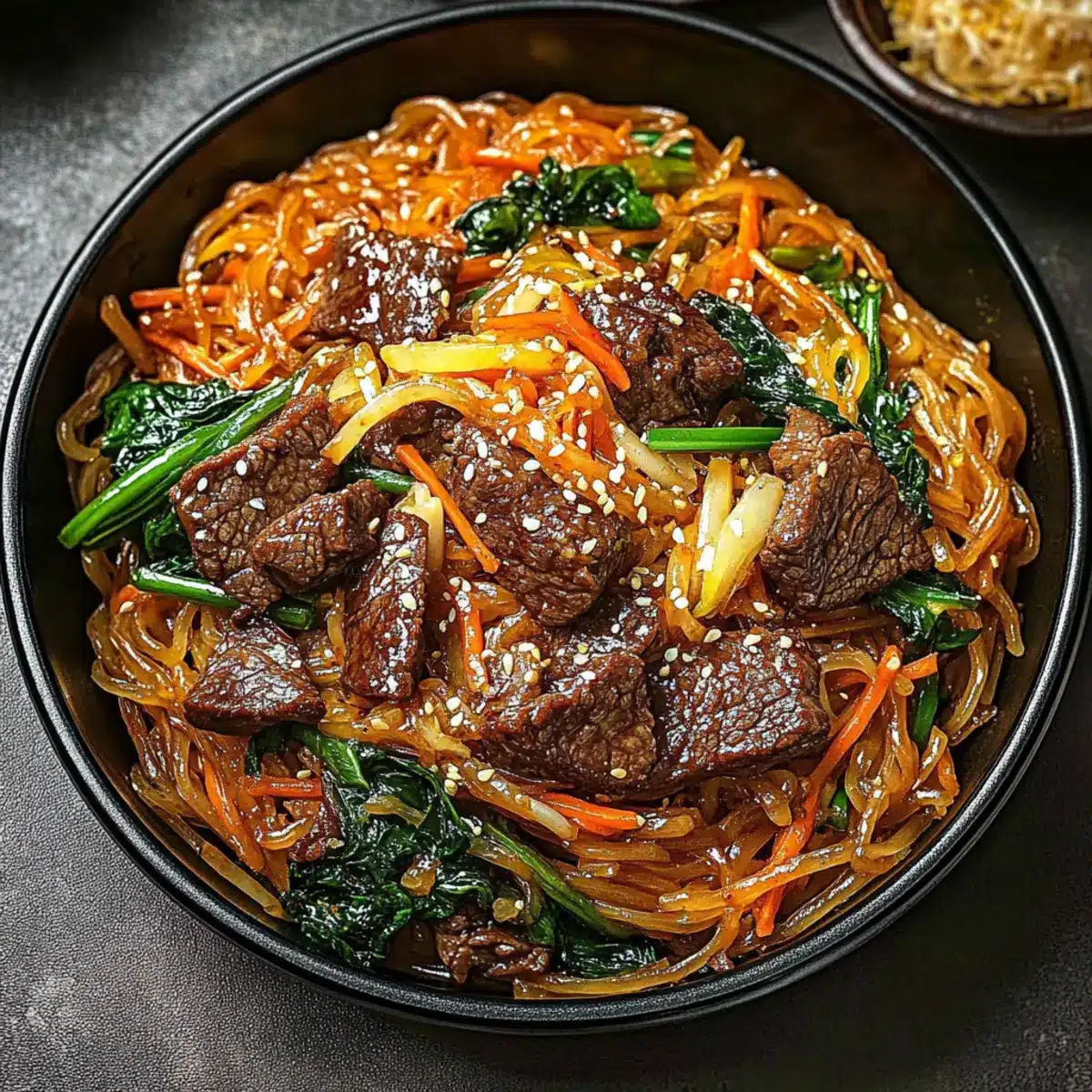
Japchae Recipe FAQs
What type of sweet potato noodles should I use for Japchae?
Absolutely go for Korean sweet potato noodles, also known as starch noodles or glass noodles! These provide the authentic chewy texture and glass-like appearance that defines Japchae. If you can’t find them, rice noodles can be substituted for a different yet still delightful experience.
How should I store leftover Japchae?
Leftover Japchae can be stored in an airtight container in the fridge for up to 3 days. Make sure to allow it to cool before sealing it to maintain optimal freshness. When ready to serve again, simply reheat it in a pan with a splash of water to help restore its moisture.
Can I freeze Japchae? How do I do it?
Yes, you can absolutely freeze Japchae! To do this, let the dish cool completely, then portion it into freezer-safe containers. Be sure to label the containers with the date; it can last in the freezer for up to 2 months. When you’re ready to enjoy it again, thaw it overnight in the fridge and reheat in a pan over medium heat with a small amount of water or broth to regain its original texture.
Are there allergen considerations for Japchae?
Very! If you’re preparing Japchae for guests with dietary restrictions, consider using gluten-free soy sauce to cater to those avoiding gluten. Additionally, if you’re including protein alternatives like tofu, make sure friends know about any soy allergies. As always, it’s best to check all ingredients for allergens before serving.
What if my sweet potato noodles are too chewy?
If your noodles end up too chewy, chances are they weren’t soaked long enough before cooking. To fix this for your next attempt, soak them in hot water for at least 20-30 minutes. This will allow them to soften beautifully, ensuring the perfect texture when stir-fried. If you find them still tough after cooking, you can also stir-fry them briefly with a touch of broth until they reach your desired tenderness.
Can I customize the vegetables in my Japchae?
Absolutely, the more the merrier! Use whatever vibrant, seasonal vegetables you have on hand. Bell peppers, spinach, carrots, and even mushrooms work wonderfully. Tailoring the veggies not only enhances nutrition but also allows for creative expression in your dish. Enjoy experimenting!
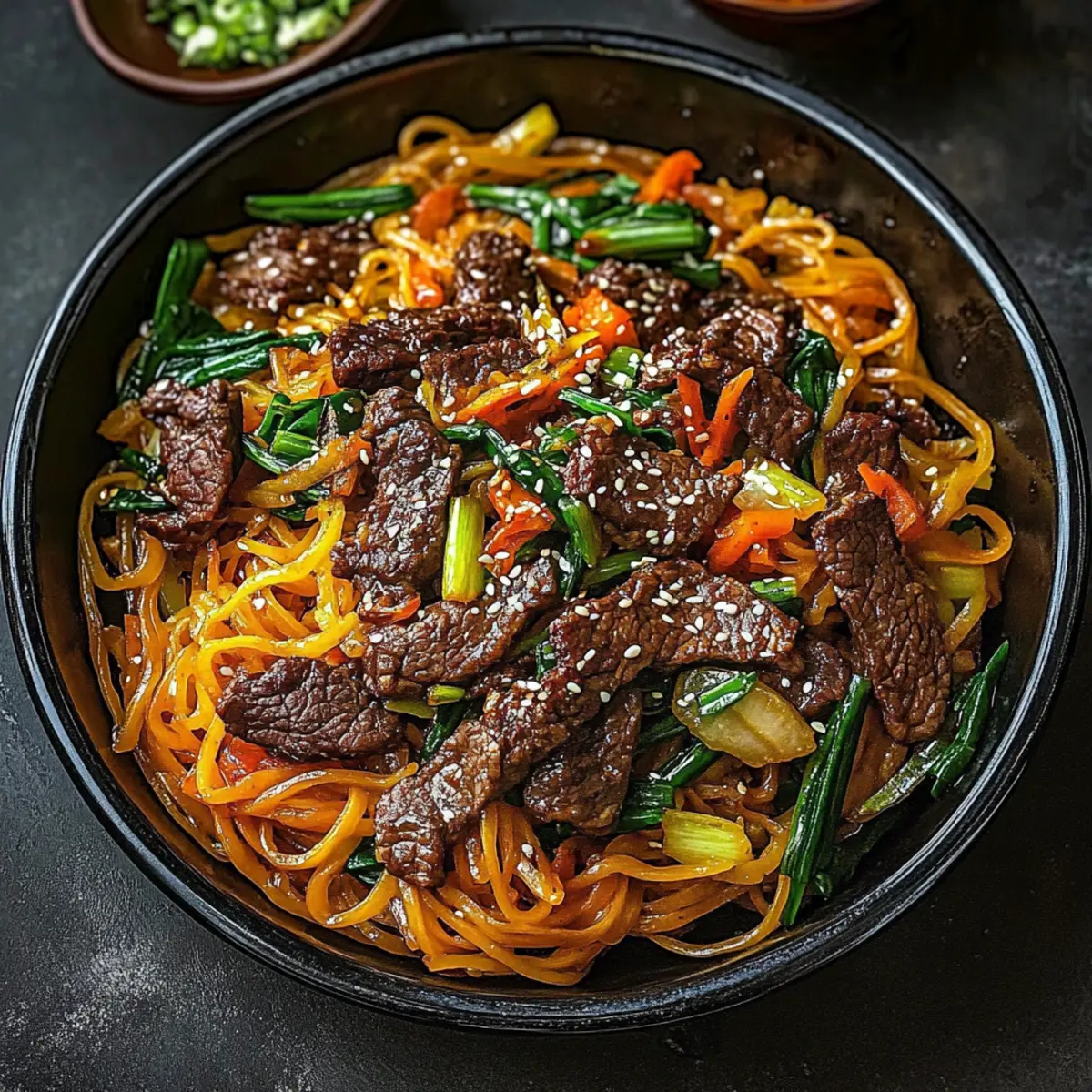
Savoring Japchae: Your New Favorite Comfort Noodle Dish
Ingredients
Equipment
Method
- Soak the sweet potato noodles in a bowl of hot water for about 20-30 minutes, then drain.
- Thinly slice your choice of protein into bite-sized pieces, and prepare vegetables by slicing them into thin strips.
- Heat a tablespoon of oil in a skillet or wok over medium-high heat, add the sliced beef and cook for about 3-5 minutes until browned. Remove and set aside.
- In the same pan, stir-fry the vegetables for about 4-5 minutes until tender yet still slightly crisp.
- Return the beef to the pan, add soaked noodles, soy sauce, and sesame oil. Stir-fry for about 3-4 minutes.
- Remove from heat and garnish with sliced green onions. Serve hot.
Leave a Reply